
Visual Schedules for Kids: The Complete Guide to Creating Calmer Daily Routines
Introduction to Visual Schedules
If getting dressed, brushing teeth, bedtime, or simply leaving the house turns into a daily struggle, you’re not alone.
Many children do best when they know exactly what comes next. But spoken reminders can be easy to miss, especially when emotions are running high or their attention is somewhere else.
A visual schedule gives children something they can see instead of something they have to remember. By breaking routines into simple, predictable steps, visual schedules can reduce stress, increase independence, and help everyday routines run more smoothly.
As parents, we’ve seen this firsthand in our own family. Our daughter responds incredibly well to visual schedules because they help make her day predictable. Instead of constantly reminding her what comes next, she can simply look at her schedule and move through each step independently. It doesn’t eliminate every challenge, but it has made many of our daily routines calmer and more consistent.
In this guide, you’ll learn:
- What a visual schedule is
- Why visual schedules work
- When to use one
- How to create your own
- Common mistakes to avoid
- Where to download a free printable visual schedule
What Is a Visual Schedule?
A visual schedule is a series of pictures, icons, photographs, or words that show the steps of an activity or daily routine in the order they happen.
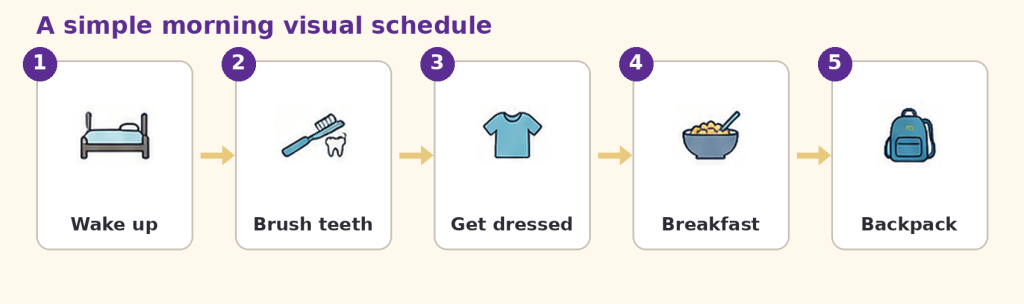
Instead of relying on verbal reminders like:
“Brush your teeth, get dressed, eat breakfast, grab your backpack, and put on your shoes.”
A child can simply look at their schedule and complete each step one at a time.
For example, a simple morning visual schedule might include:
- Wake up
- Use the bathroom
- Brush teeth
- Get dressed
- Eat breakfast
- Put on shoes
- Grab backpack
Each completed step helps children understand exactly what comes next, reducing uncertainty and making routines easier to follow.
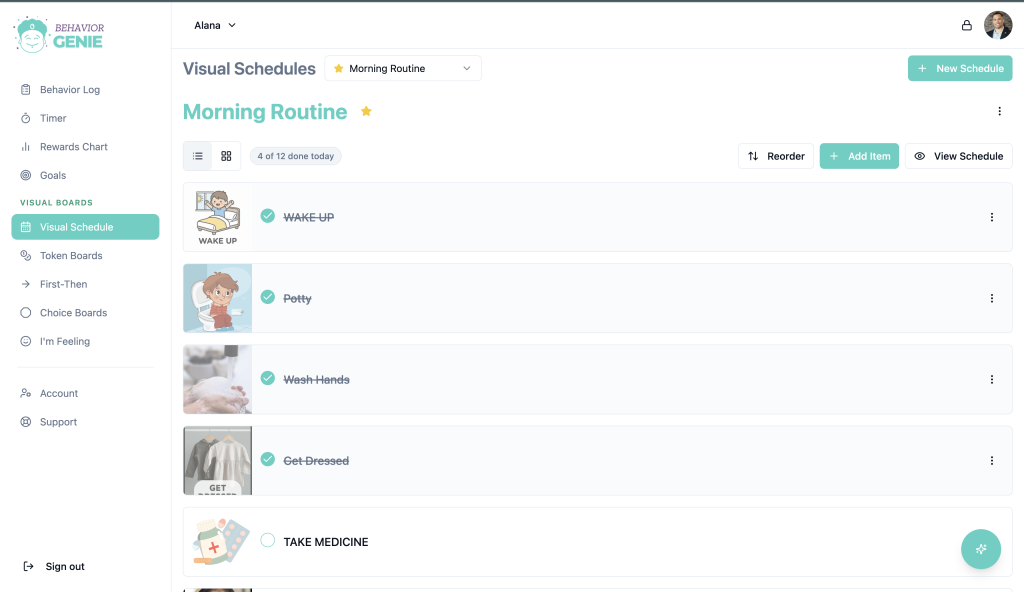
Visual schedules can be created with printed pictures, photographs, drawings, icons, magnetic boards, dry erase boards, or digital tools like Behavior Genie.
Why Visual Schedules Work
Many children struggle because they have to remember multiple verbal instructions while also managing emotions, distractions, and transitions.
Visual schedules reduce that mental load.
Instead of trying to remember everything they’ve been told, children have a clear visual reminder available whenever they need it.
Research and practical experience have shown that visual supports can help children by:
- Building independence
- Reducing anxiety around routines
- Improving transitions between activities
- Creating consistency throughout the day
- Reducing repeated verbal prompting
- Increasing confidence and success
Over time, many children begin completing routines with fewer reminders because the schedule becomes the guide instead of relying entirely on parents.
Benefits of Using Visual Schedules
Visual schedules provide benefits for both children and caregivers.
For Children
- Know what to expect throughout the day
- Build confidence through successful routines
- Develop greater independence
- Improve organization skills
- Reduce frustration during transitions
- Experience fewer unexpected changes
For Parents and Caregivers
- Fewer repeated reminders
- Less arguing during routines
- More consistent expectations
- Easier transitions between activities
- Better communication with grandparents, babysitters, and therapists
- A calmer home environment
While every child is different, many families notice improvements simply because routines become more predictable.
When Should You Use a Visual Schedule?
Visual schedules can be used almost anywhere there is a routine.
Some of the most common examples include:
Morning Routine
- Wake up
- Bathroom
- Brush teeth
- Get dressed
- Eat breakfast
- Shoes
- Backpack
Bedtime Routine
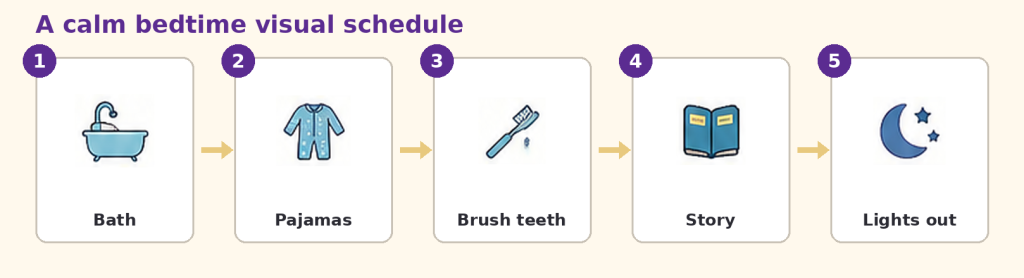
- Bath
- Pajamas
- Brush teeth
- Story time
- Goodnight hug
- Lights out
After School Routine
- Snack
- Homework
- Free time
- Dinner
- Bath
- Bedtime routine
Household Chores
- Make bed
- Feed pets
- Clean room
- Laundry
- Take out trash
Community Outings
- Grocery shopping
- Doctor appointments
- Restaurants
- Church
- Visiting family
- Traveling
Visual schedules are especially helpful anytime a child asks, “What’s next?”
Who Can Benefit from a Visual Schedule?
Although visual schedules are commonly associated with autism, they can benefit nearly any child who struggles with routines, transitions, or organization.
Visual schedules may be helpful for:
- Preschoolers learning daily routines
- Kindergarten and elementary-aged children
- Children with autism
- Children with ADHD
- Children with anxiety
- Children with speech or language delays
- Children learning new responsibilities
- Any child who benefits from structure and predictability
Many families find that even siblings without developmental differences enjoy using visual schedules because they create clear expectations for everyone.
How to Create a Visual Schedule
Creating a visual schedule doesn’t have to be complicated.
Step 1: Choose One Routine
Start with the routine that causes the most stress.
For many families, that’s either the morning routine or bedtime.
Trying to change every routine at once can feel overwhelming.
Step 2: Break the Routine into Small Steps
Each step should be simple and easy to understand.
Instead of:
“Get ready for school.”
Break it into:
- Get dressed
- Brush teeth
- Eat breakfast
- Shoes
- Backpack
Step 3: Use Pictures Whenever Possible
Many children process pictures faster than written words.
You can use:
- Photos
- Clipart
- Icons
- Drawings
- Symbols
Older children may only need written words.
Step 4: Place the Schedule Where It Will Be Used
Keep the schedule close to the routine.
Examples include:
- Bathroom mirror
- Bedroom wall
- Kitchen refrigerator
- Front door
- Homework area
The easier it is to see, the more likely it will be used.
Step 5: Teach the Schedule
Walk through the schedule together several times before expecting independent use.
Point to each picture as your child completes each step.
Over time, encourage them to check the schedule before asking what comes next.
Step 6: Stay Consistent
Consistency is more important than perfection.
Even if your child needs reminders initially, continue referring back to the schedule instead of giving all the directions verbally.
Eventually, many children begin checking it on their own.
Printable vs. Digital Visual Schedules: Which Is Right for Your Family?
Printable visual schedules are a wonderful way to get started. They’re simple to use, easy to print, and can help children build routines, reduce stress, and gain independence.
As routines change, however, many parents find themselves printing new schedules, cutting out new picture cards, and creating entirely new boards every few weeks. If you’re juggling multiple routines or sharing responsibilities with a spouse, grandparent, babysitter, or therapist, keeping everyone on the same page can become challenging.
That’s where digital visual schedules can make everyday life even easier.
Printable Visual Schedules
- Great for getting started
- Easy to print and use immediately
- Perfect for introducing new routines
- No technology required
- Ideal for families who only need a few simple schedules
Digital Visual Schedules with Behavior Genie
Behavior Genie takes everything parents love about printable visual schedules and makes them easier to manage as your child’s needs grow.
With Behavior Genie, you can:
- Create unlimited custom visual schedules in minutes
- Choose from professionally designed schedule templates to quickly build common routines like mornings, bedtime, after school, chores, and more
- Access a library of more than 500 visual schedule items to customize your child’s routines
- Upload your own images to create schedules that use familiar people, places, and objects your child recognizes
- Edit routines anytime without printing new materials
- Access schedules from your phone, tablet, or computer
- Share schedules with your spouse, grandparents, babysitters, teachers, and therapists at no additional cost
- Create different schedules for mornings, bedtime, after school, chores, appointments, and more
- Keep all of your child’s behavior support tools, including visual schedules, token boards, choice boards, goals, visual timers, behavior tracking, and AI-powered parent support, together in one place
Many families start with a printable visual schedule to establish a routine, then transition to Behavior Genie when they want greater flexibility, easier updates, and a single place to manage their child’s daily routines.
If you’re just getting started, download our free Visual Schedule Starter Pack below. When you’re ready for a more customizable solution that grows with your family, Behavior Genie makes creating, organizing, and sharing visual schedules simple—without the printing, cutting, or reprinting.
Common Mistakes to Avoid
Many visual schedules don’t work because they’re either too complicated or used inconsistently.
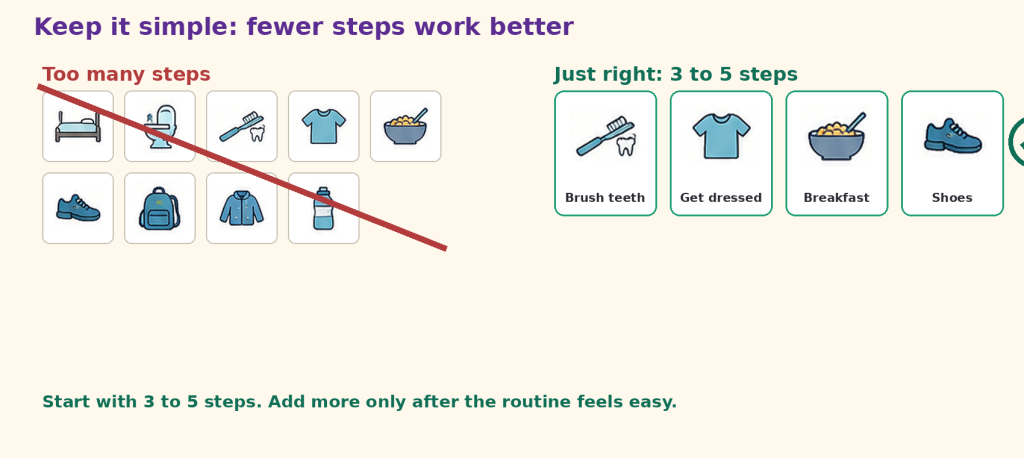
Avoid these common mistakes:
- Including too many steps
- Frequently changing the order
- Giving verbal reminders instead of pointing to the schedule
- Expecting immediate independence
- Making the schedule difficult to see
- Trying to introduce several new schedules at once
Remember that the goal is progress, not perfection.
Download Your Free Visual Schedule Printable
If you’re ready to get started, download our free visual schedule printable and begin using it with your child today.
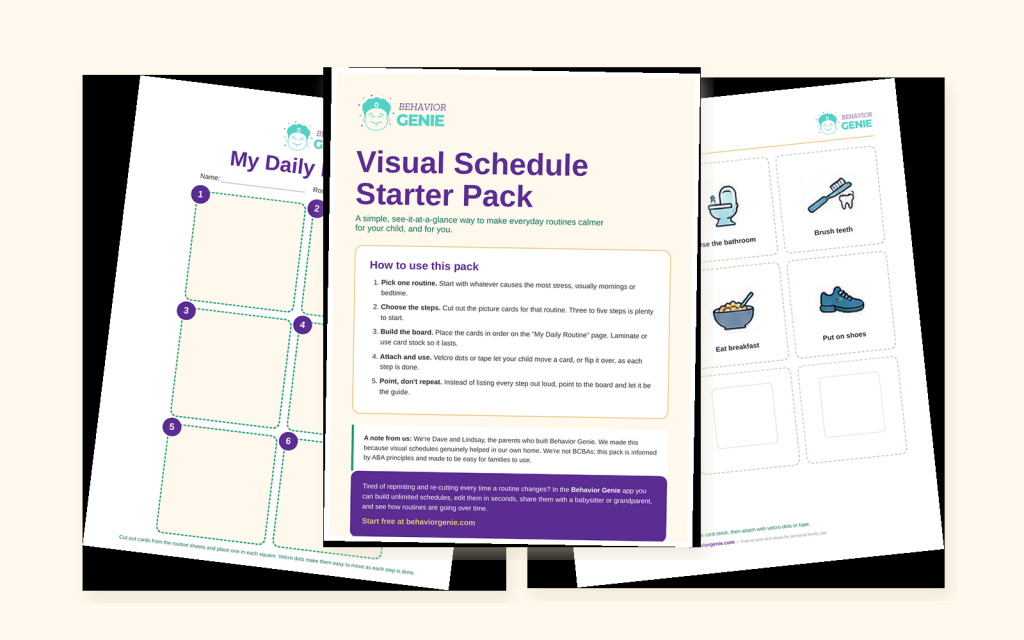
Free Printable Includes:
- Easy-to-use visual routine template
- Ready-to-print picture cards
- Simple instructions for parents
If you want even more flexibility, Behavior Genie allows you to create unlimited custom visual schedules using your own activities, pictures, and routines. You can edit schedules anytime, share them with caregivers, and access them from your phone or tablet.
Frequently Asked Questions
What age should children start using visual schedules?
Many children can begin using simple visual schedules as early as two or three years old. The schedule should match the child’s developmental level and use pictures they easily recognize.
Do visual schedules work for older children?
Yes. Older children often benefit from checklists, written schedules, or digital visual schedules that support independence while respecting their age.
Should I use pictures or words?
Younger children usually benefit most from pictures or photographs. As reading skills improve, many children transition to written words or a combination of both.
How many steps should a visual schedule include?
Start with just three to five steps. As your child becomes comfortable, you can gradually increase the number of activities.
Do visual schedules replace rewards?
Not necessarily. Many families combine visual schedules with positive reinforcement, token boards, or reward systems to encourage consistency.
What if my child ignores the schedule?
Continue gently redirecting your child back to the schedule instead of repeating instructions verbally. Like any new routine, it takes time and consistency before it becomes a habit.
Can I use a visual schedule if my child can’t read?
Absolutely. Many visual schedules use pictures, photographs, or simple icons instead of words. This allows children to understand the routine without needing to read. As reading skills develop, you can gradually introduce written labels alongside the pictures.
How long does it take for a visual schedule to work?
Every child is different. Some children begin following a visual schedule within a few days, while others may need several weeks of consistent practice. The key is to continue referring your child back to the schedule instead of relying only on verbal reminders.
What’s the difference between a visual schedule and a First-Then board?
A visual schedule shows an entire sequence of activities, while a First-Then board focuses on just two steps: the current activity and what comes next. First-Then boards are often helpful for shorter tasks or when encouraging a child to complete a less preferred activity before moving to a preferred one.
Can visual schedules help reduce meltdowns?
Visual schedules can help reduce anxiety and frustration by making routines more predictable. While they won’t prevent every meltdown, many families find that knowing what comes next helps children transition more smoothly and reduces stress during daily activities.
Final Thoughts
Visual schedules aren’t about creating perfect routines. They’re about making everyday life a little more predictable, a little less stressful, and a little more successful for both children and parents.
When we started using visual schedules with our own daughter, we quickly realized they weren’t just helping her. They were helping us communicate more clearly and spend less time repeating the same instructions throughout the day.
If you’re just getting started, don’t try to change everything at once.
Choose one routine.
Keep it simple.
Be consistent.
Small improvements today can lead to greater independence and confidence over time.
Ready to Build Calmer Daily Routines?
Whether you’re just beginning with a printable visual schedule or you’re looking for a more flexible digital solution, the most important step is simply getting started.
Download our free Visual Schedule Starter Pack to begin building routines today. When you’re ready, try Behavior Genie to create unlimited customizable visual schedules, choose from ready-made templates, access a library of over 500 visual schedule items, upload your own images, and keep all of your child’s behavior support tools together in one place.
Start your 7-day free trial and discover how Behavior Genie can help make everyday routines simpler for your entire family.